Performance Exhaust Systems
Valved Exhaust Systems
Two exhaust paths in one system, switched by a valve: electronic or vacuum-controlled, bench-tested before packing.
A valved exhaust system carries two paths through its muffler section. With the valve closed, the exhaust follows the full muffler path; with it open, the gas takes the freer route and the note changes. The driver switches from the cabin. Valved systems in this range — listed as Valvtronic systems in the order book — use electronic or vacuum-controlled valves, and the valve is part of the system as delivered, not an accessory to source separately.
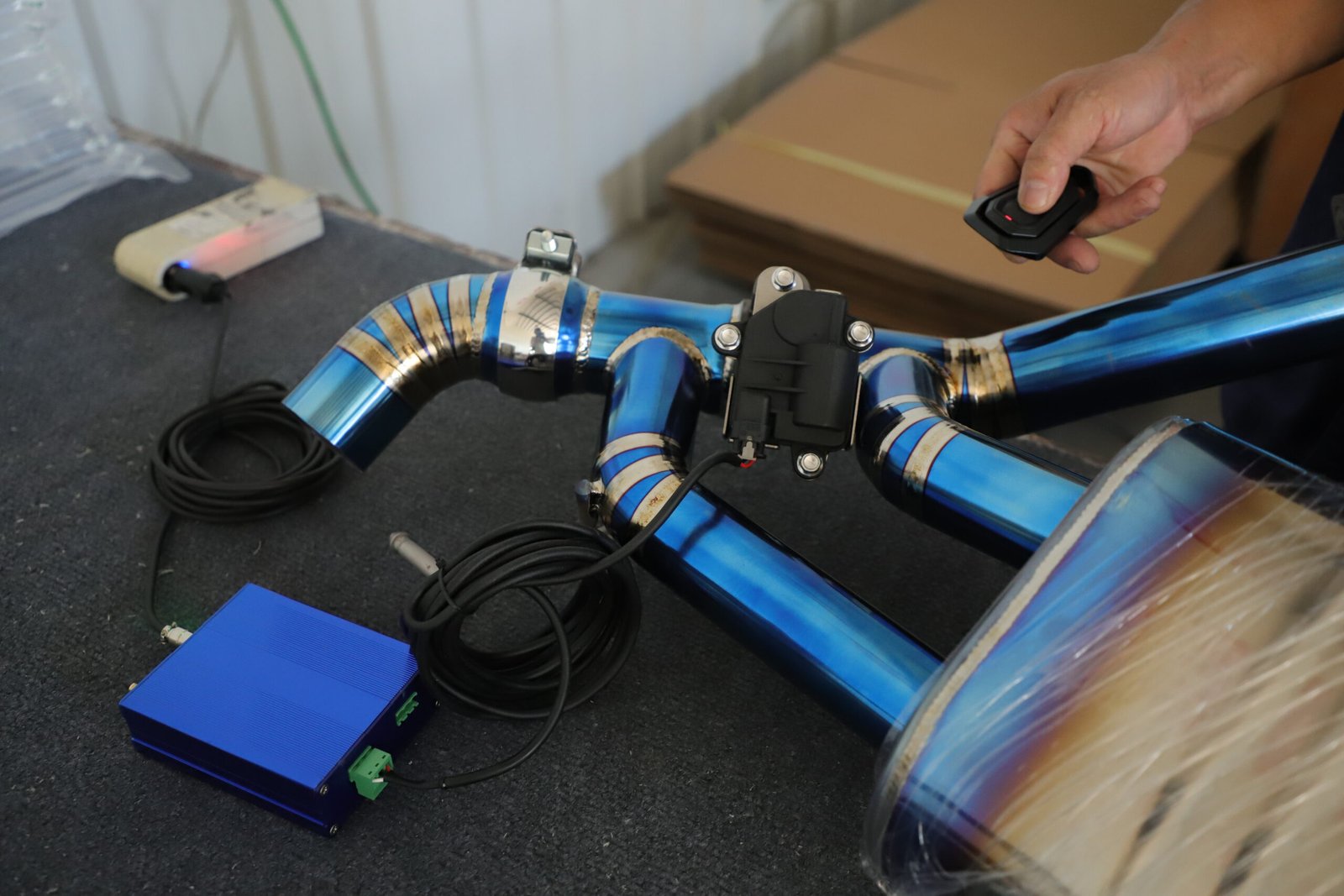
- Two valve typesElectronic and vacuum
- Bench-testedValve cycled before packing
- Remote controlSupplied with the system
- SS304 & titaniumAcross the catback range
Electronic and Vacuum Valves Compared
Electronic valves are driven by a motor on the valve body, controlled by a remote or a cabin switch and powered from the car's electrical system. Vacuum valves are driven by engine vacuum through a control unit, the arrangement many factory sport exhausts use. Both are fitted across the range; which one a system carries is an application specification, set out in the table and confirmed per order.
The valve hardware is installed and cycled on the bench before the system is packed — the bench cycle is photographed on a titanium section mid-test, remote in hand, controller wired. A system whose valve has not cycled on the bench does not leave.
| Valve type | How it is driven | Control | Found on |
|---|---|---|---|
| Electronic | Motor on the valve body | Remote or cabin switch | Valved catback and axle-back systems |
| Vacuum | Engine vacuum via a control unit | Remote or cabin switch | Valved systems on applications with factory vacuum control |
| None (unvalved) | — | — | Straight-through systems across the range |
What Changes When the Valve Opens
The muffler section is built with two internal paths. The closed path routes the gas through the full silencing layout; the open path bypasses part of that layout. Nothing else in the system changes — same pipework, same tips — which is why a valved system is specified as one system with two states, and why the blog post on valved systems treats the valve as a routing device rather than a separate product.
Specifying a Valved System
Send the vehicle and model year. The reply confirms whether the application is produced as a valved system, which valve type it carries, the material and tip options on that application, and the quotation. Retrofit questions — a valved rear section for a car whose mid-pipe stays — are answered against the axle-back version of the same system.
Ask about valved exhaust systems for your vehicle
Send your vehicle, engine and model year. The valved exhaust systems options that fit are confirmed first, then quoted with finishes and hardware.
Send an Inquiry